Short verdict
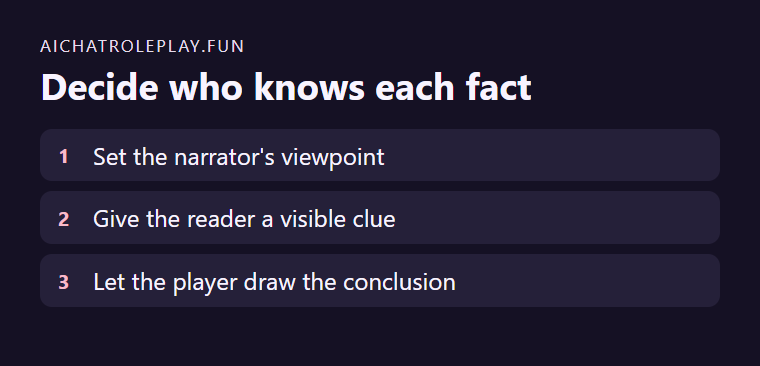
Choose what the narrator can see before drafting the opening. Character instructions and example dialogue help establish how a scene is told. Use one visible clue and leave the conclusion with the player.
Choose what the narrator can see before drafting the opening. Character instructions and example dialogue help establish how a scene is told. Use one visible clue and leave the conclusion with the player.
Write the difference in a small scene
Two fictional adult surveyors arrive at a workshop with a locked drawer. The narrator can describe fresh oil on the drawer’s hinge and a missing key, but the player must ask who last opened it. Put the hidden explanation in your private outline. In the first turn, ask for narration limited to what the surveyors can observe.
Check what the reply revealed
If it names the person responsible before the player asked, revise only the perspective instruction. Keep the clue and setting available. If the reply withholds everything, ask it to mention one object the player can inspect. That makes the narrator’s limits playable.
Sources and freshness
Product facts are checked against official public pages. Models, limits, pricing, and policies change; verify live documentation before signing up, connecting a provider, or paying.
Independent publication; verify current details with each provider.